Shades of Grey

The fog rolls in over the village of Schleitheim, SH in Switzerland.

The fog rolls in over the village of Schleitheim, SH in Switzerland.

Another day shrouded in grey. Winter in mainland Switzerland often means days on end of fog – thick fog that engulfs the village and obscures the hills around, or high fog that obscures the sun. I’ve become a sun worshiper since I live here. When the sun does appear, whether it bursts through the grey in brilliance or as a wane light valiantly pushing through , I’ll jump up from my office chair into my coat and boots and head out for a walk. It’s amazing what a change in mood the sun evokes in me. My husband finds it strange. I find it normal. Light is essential to life, right? And I am life. I need light!
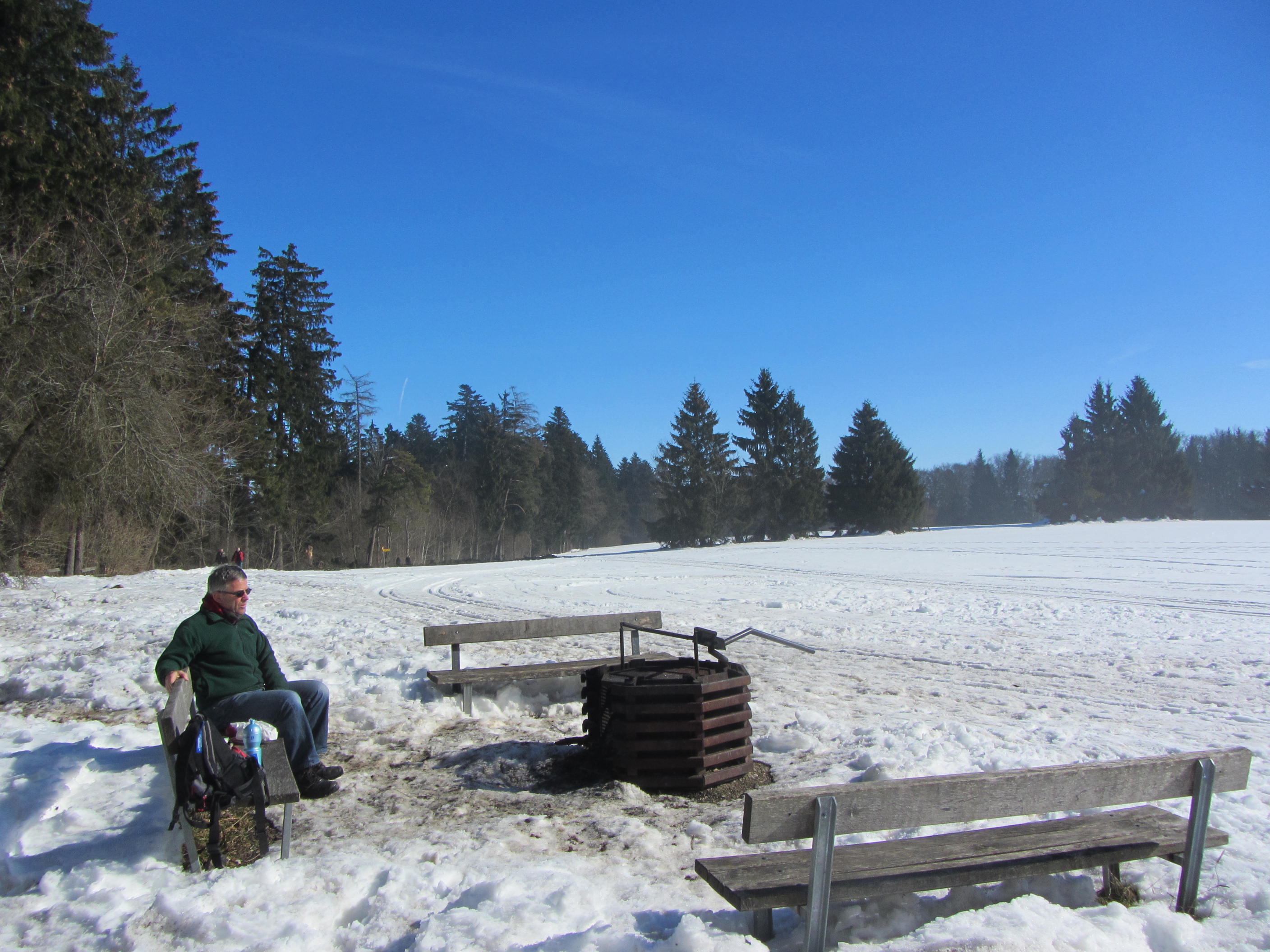
Just ten minutes drive to the Randen and a bright world.

Just ten minutes drive to the Randen and a bright world.


The fog is symbolic for what’s going on in parts of my life and in the world. There are issues that seem cloaked by a permanent grey fog. Then sometimes there will be a day, or days, when things take a bright turn, like the sun bursting out. The morning newspaper or the evening news has little in the way of sun to report. Whole nations lie under the dense thick fog of repressive governments or civil war. Terrorist attacks are reaching the cities close to us. We don’t feel that safe anymore.
When I feel powerless against the thick fog that hides the sun that I know is there just above us I wonder if that’s how people feel in less privileged countries. They know the sun is there, and they know it shines over our country. Is it any wonder so many refugees are seeking asylum here?

P.S. Robert decided I needed a few hours of bright sun and took me into the hills above the village. Life is good!

Posted in Uncategorized | Leave a comment

Housewarming party 20 years ago still touches lives today!

Twenty years ago Robert and I moved to Westlock County, Alberta, Canada. Our farm felt a long ways from nowhere, far from family and friends. One night in that first lonely season darkness had settled around the new house we’d just built, when a set of lights moved up our long driveway. Then more lights, and yet another set of lights. I opened our door to a steady stream of people. The neighbours had called a traditional housewarming party and had come to welcome us into our new community. It was so special for us. These people became our family. At the end of the evening, someone handed us an envelope full of bills, a gift from everyone there.
I kept that envelope in the table beside our bed, always planning to use it for something very special. Every so often I’d see it, but that very special thing never materialized. Last week we were packing our house up, new renters would be coming soon, and we’d made our home back in Switzerland. I found that envelope again. It was time to use it.

Somewhere among this mess there was an envelope from our housewarming party 20 years ago!

Somewhere among this mess there was an envelope from our housewarming party 20 years ago!


Before leaving for Switzerland again we had supper with friends at the hotel near the airport. I paid the supper in cash, with a pile of bills from that envelope. I didn’t think much of it, but the waitress sure did. She was so excited – she was a young girl and these were such old bills! When she saw the $20 bill, she asked, “Which country is that from?”
“There”, I showed her. “It says Canada in big letters on the front of the bill.” She took those bills, said they were hers now and ran through the bar showing them to everyone. I think we could have asked for anything right then!
The next morning we gave a $5 bill to our waitress from China, who was just as excited. She would keep it for herself. The waitress had been a farmer in China, so we quickly established a connection. The next $5 went as tip to the shuttle bus driver, a Palestinian from the Gaza Strip, who has been in Canada for ten years. He too was excited, saying he would keep it for his children, and what a blessing we were to him. He then proceeded to tell us what it was like to live in the Gaza Strip.
Thank you, my neighbours! You gave us a special evening twenty years ago when you took us into your hearts. You gave us another special evening last night with friends. You gave two waitresses and a shuttle bus driver a special gift. I’ve kept the envelope with the last few bills. I have children and grandchildren too. If everyone else thinks those bills are so exceptional, I had better keep some myself!
It took twenty years, but that gift became a very special event! .
One last look back at the farm that has blessed us so much in the last twenty years.

One last look back at the farm that has blessed us so much in the last twenty years.

Posted in Uncategorized | Leave a comment

Would your business survive with 28 per cent interest?

A Zambian friend, Henry, sent me an email yesterday to my question as to what the loan interest rates in Zambia were if the loan was in the local currency, the Kwacha. Here’s his answer:

“Believe it! It’s actually 28% as of today. This is the figure I was given at Stanbic (bank in Zambia) for my facility.
It’s as a result of the Kwacha downfall.
Kind regards.
H”

Larger farmers and businessmen work with the US dollar. Interest rates for US dollar loans are around 12 per cent. It’s still high, but manageable. The small farmer and a good part of the emerging farmer sector don’t have the ability to work with US dollars. Besides the fact that most banks are reluctant to lend to black Zambian farmers, the Kwacha interest rates make a loan very uninteresting.
Just one of the many reasons Zambian small farmers have a difficult time moving forward.

Posted in Uncategorized | Leave a comment

At the top of the Maslow Pyramid

Farmers play a big part in making Switzerland the beautiful country it is.

Farmers play a big part in making Switzerland the beautiful country it is.

Last week I followed an inspector around some of the meadows in our corner of Switzerland. Paul Leu was checking to see if the meadows, hedges and fruit trees were eligible for a new government agriculture subsidy program that was aimed at maintaining and increasing certain indigenous plant populations. Some of these fields used to produce a heavy crop of wheat or at least hay. But that’s not what farmers in Switzerland are paid to produce anymore. The emphasis is on sustaining and improving the environment for birds, insects, and small animals. If Leu found six of the plants on his list, and that uniformly over the whole meadow, it would be eligible for the subsidy program. The hedges have to have at least five and those only indigenous shrubs, 20 per cent of which must be thorny so certain birds would find protection. Orchards must have at least 10 tall fruit trees, at least three varieties (for example, cherry, plum, apple), in at least 20 square meters, all not further than 30 meters apart. Paul had to know how to count and measure!

The government introduced another new subsidy – a landscaping incentive. It pays for farmers to plant a rose bush at the end of their row of grapevines; to keep a clean yard, with flowers blooming on the windowsills; to keep the traditional fruit orchard out back. It pays to increase field rotation to seven crops – more crops give more colour and variety to the landscape. Farmers are being reimbursed for their part in making Switzerland the beautiful country it is. Looking at it that way, it’s only fair. That’s what tourists come to see, after all – old farmhouses with windows covered in swaths of red geraniums, happy cows on flowering alpine meadows.

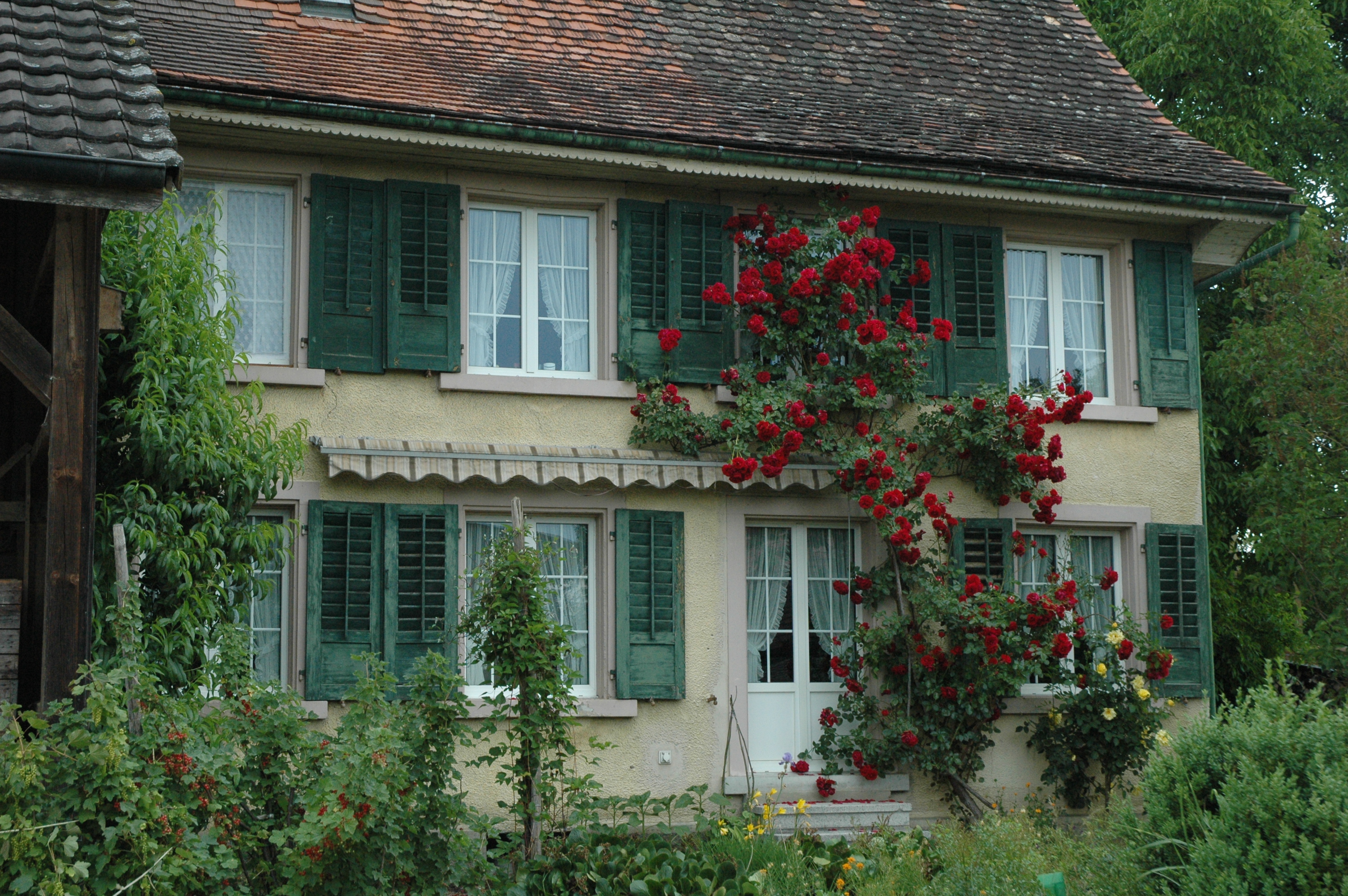
Blooming climber on an old farmhouse. It's a real treat to hike or bike through Switzerland right now.

Blooming climber on an old farmhouse. It’s a real treat to hike or bike through Switzerland right now.

“We can import all the food we need,” Paul told me cynically. “But we can’t import the flower meadows.” Fourteen per cent of the Kanton of Schaffhausen’s agriculture land is now ecologically sensitive area. Many farmers struggle with this new twist on their identity. They prefer to be producers, not landscape gardeners. But if flower meadows pay the bills better than wheat, so be it. Tourists will still see wheat fields, but often they’ll be interspersed with red poppies. It makes for scenic hiking and biking.

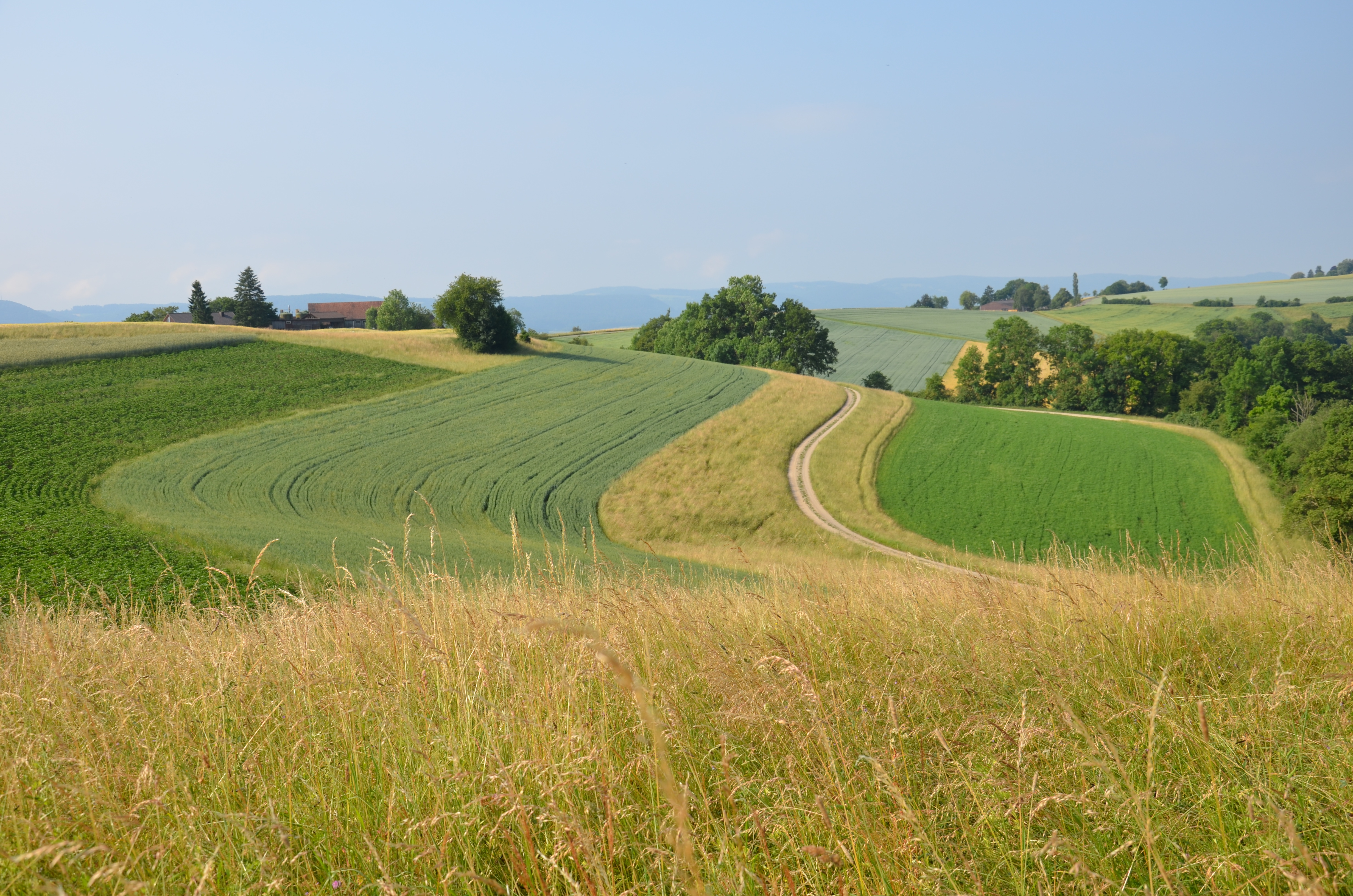
It's true - the many colours of different crops make for a rich landscape.

It’s true – the many colours of different crops make for a rich landscape.

It all feels pretty trivial after coming back from Zambia, where we and many others, including the Zambian government, are trying to help farmers produce better and more, so they have enough to eat. Here in Switzerland we’re more worried about providing food for our environment than for our people. I guess that’s what it’s like to be at the top of the Maslow Pyramid!

Posted in Uncategorized | Leave a comment

Zambia’s growth throws some dark shadows

We left Zambia in its fall: dry corn stalks and combines harvesting soybeans. Where there’s irrigation the winter wheat is emerging a soft green. Those that have access to water are busy planting vegetable gardens. There won’t be any rain to speak of until late October, with the onset of the rainy season.

The beauty of Zambia - Victoria Falls from the air.(picture courtesy of Andy Kradolfer)

The beauty of Zambia – Victoria Falls from the air.(picture courtesy of Andy Kradolfer)

Back home in lush green Switzerland: The corn is coming up nicely, the sugar beets are covering the soil, the haying is done, the canola is podding, wheat and barley are in head. It’s such a neat, tidy country with its clean villages – century old houses surrounded by blooming Elderberry and peonies.

Zambia's gardens bloom profusely at this time - Eva's Bridal Veil poinsettia.

Zambia’s gardens bloom profusely at this time – Eva’s Bridal Veil poinsettia.

But I miss Zambia, with its streets and roadsides teeming with people in colourful clothing. I miss the street vendors in hastily constructed shelters of rough lumber in a row along a busy junction. Many more sit on the bare ground beside a basket of tomatoes, bananas, or freshly harvested groundnuts (peanuts) which are so tasty boiled for 15 minutes. The more prosperous might have an array of the seasonal vegetables and fruits – apples and oranges just harvested from South Africa, bananas, squash, tomatoes, sweet potatoes, and everywhere, water melon. May is watermelon season. Depending on the size, they sell for one to two dollars. So sweet, so good!

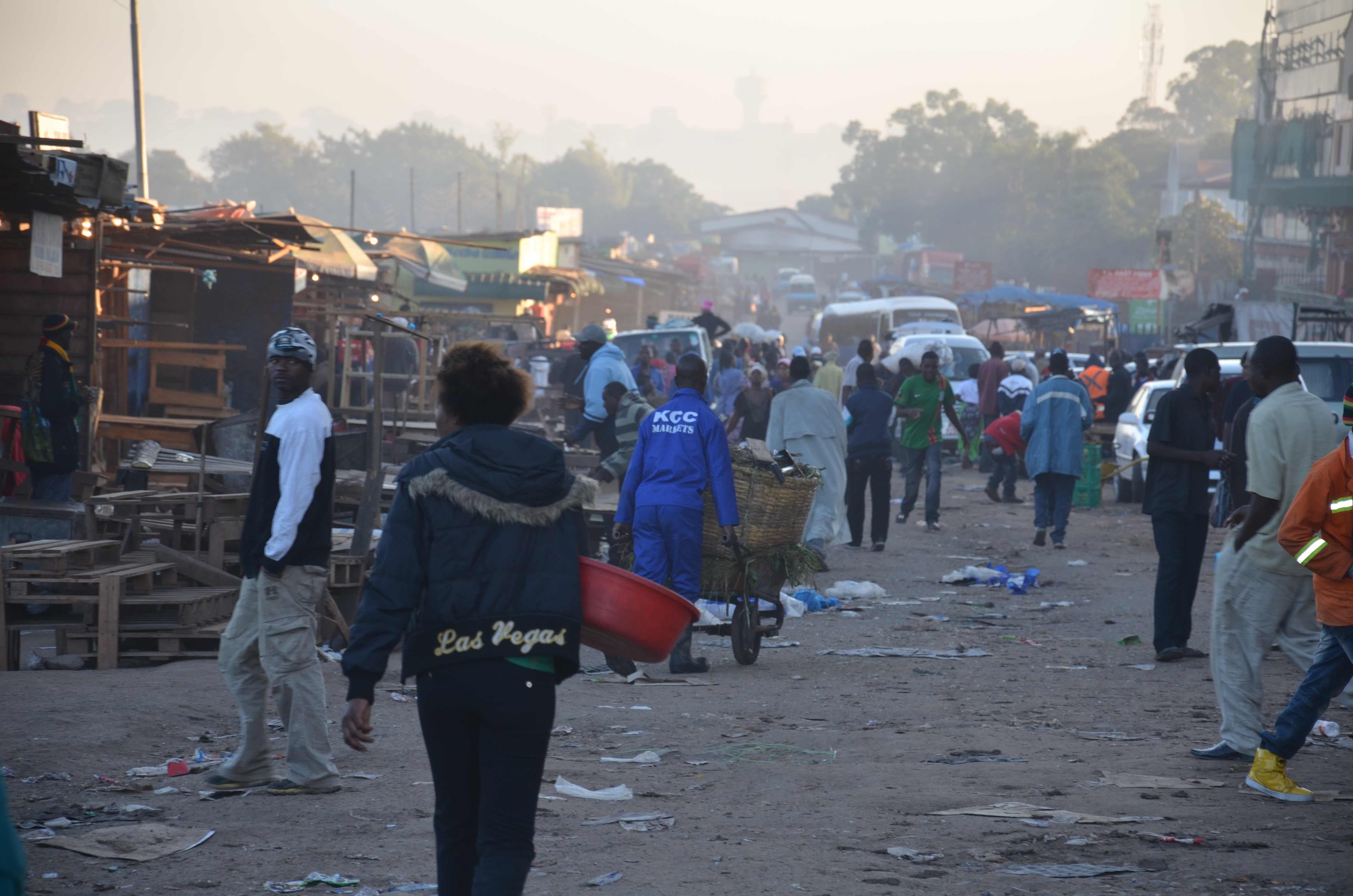
Early morning in Kitwe - Kitwe's main market getting ready for the day.

Early morning in Kitwe – Kitwe’s main market getting ready for the day.

Zambia is booming – everywhere buildings are going up. The cement block makers are doing good business. Roads are even more congested as the growing middle class acquires cars. Infrastructure struggles to keep up with the boom. More money in the country means basic staples like food become more expensive. The director of CINDI, a Kitwe NGO working with vulnerable children, told me that although for many things are getting better, for the poor, things are the same or worse. The young woman selling a basket of groundnuts along the road struggles constantly to put food on the table. There are few options for a girl like her, often with a poor education; no job opportunities to speak of. Many of these girls, out of desperation, turn to prostitution for a living. That’s one commodity that always seems to have a market. It comes with a high price – according to Irene who works with prostitutes, most of them end up being HIV positive.

I saw good things happening in Zambia. I saw the towns swelling with new houses. New roads are being built. I met a growing number of emerging farmers – the group that is moving from small scale farmer status to making it a serious business.

But I also saw the other side – the street vendors sitting beside a basket of groundnuts and bananas, hoping to sell enough to buy supper that night. I met the prostitutes who see no other way to make a living than to sell their bodies. I heard about the many small scale farmers that are still struggling to just feed their families. There are the masses of the poor in the teeming compounds of the cities – the shanty towns – that somehow survive, although most of them have little or no steady income.

Zambia’s coming up, but there’s still a long ways to go.

Posted in Uncategorized | 2 Comments

What do Africans think of Mzungus (whites)?

Last night I had tea with my friends Vivienne and Margaret.
“Tell me, Marianna, what do the Mzungus think of Africa and Africans?” Margaret asks. (Mzungus is the term for Westerners, or whites as they call them here in Zambia.)

The middle class in Zambia is growing. A girl's night out at one of Kitwe's finer restaurants.

The middle class in Zambia is growing. A girl’s night out at one of Kitwe’s finer restaurants.

“I will tell you, if you will then tell me what Africans think of Mzungus,” I reply. Margaret nods. Then I describe the first thought of most Westerners who have not been in Africa – Africa is a hopeless case. One tribal war after another. All those billions of dollars sent as aid, and where is it? Same old, poverty has not changed. Africa is not moving forward. They think of starving children, of AIDS, of poverty, of desert.

Shopping malls full of vehicles are not a strange sight in Zambia.

Shopping malls full of vehicles are not a strange sight in Zambia.

“But why do they think like that?” Margaret is indignant, as she should be. We are sitting in a quite comfortable home, eating well. Her children and grandchildren are doing well, as many Zambians are. Zambia is a beautiful country, fertile, with many big farms. Cities are congested with the growing number of cars, because of a growing number of more prosperous people. Buildings are going up everywhere. There are still many people who are hungry, there is poverty, but there is so much more.

“That’s what they see on the news. That’s what television reports. Sudan is fighting again. The tribal wars in Congo. The AIDS situation. That’s what they hear from the NGOs who need money for their programs for orphanages.”
“But why do they report like that?”

“They need sensations to report. Good news is not sensation. And anyway, the hard things need to reach the world. And the evening news is short.” Margaret knows herself, this is all true.

“Mzungus are all very rich,” Margaret now says. “They are all well educated and happy. There are no problems there such as we have. They all drive cars and live very comfortably. In their countries there is no corruption or poverty. Everything is nice. Things work very well. So when an African sees a Mzungu, they think he has money. That’s how I think and I think that’s how most Africans think.”
“I also used to think like that,” Vivienne adds. “But when I took the Peace and Reconciliation course we did much research. We found that there are wars in European countries. That not everyone is rich. Now I think differently.”

I tell them how things are in Europe and North America. That we have many poor people too, of soup kitchens and food banks. The women are incredulous. I talk of the divorce rate, of corruption scandals. It is true that the West is doing much better than Africa, of course. But the picture most Africans have is as faulty as the Mzungu picture of Africa.

There are many people in both cultures who see a truer picture, but I think the above perceptions are the norm. Both perceptions are faulty. Yet we act out of them. We need more exchanges such as the one we just had. I hope Margaret and Vivienne will tell others of our conversation.

Posted in Uncategorized | Leave a comment

Back ‘home’ in Zambia – organic farming

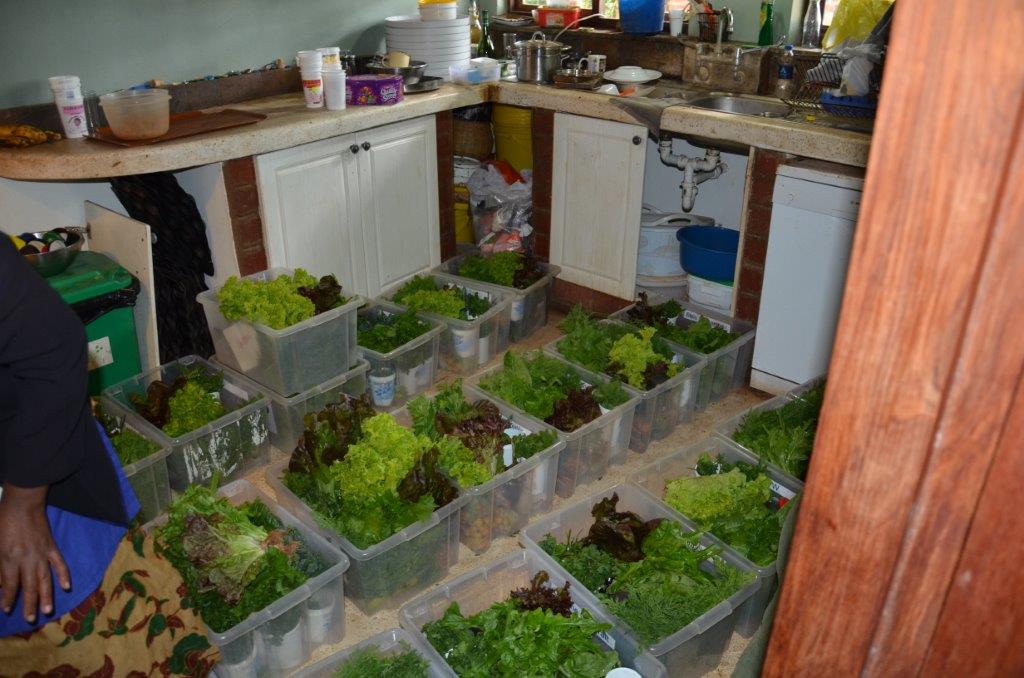
Green Boxes go out to 70 customers per week.

Green Boxes go out to 70 customers per week.

It’s been two years since I last visited Zambia. I stepped out the door of the plane, and my smile stretched from ear to ear. I was surprised myself at how very happy I was to be back. Those who live here all the time smile wryly. I know – life here is not all roses, like the ones lining the walk to the airport building. We’ve been immensely frustrated ourselves so often at the inefficiency of systems, the time it takes to get anything done, the bureaucratic hassles. But still, joy is the main emotion of the moment.

Yesterday I had the opportunity to visit Lilayi Farm, just south of Lusaka city. I went out to interview Alan Miller about the farming situation in Zambia, and ended up spending a wonderful hour with his partner, Annemieke Devos, who is growing and selling organic food.
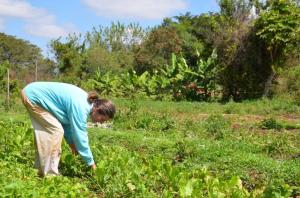
Annemieke is passionate about her organic market garden.

Annemieke is passionate about her organic market garden.

When I came to the house, boxes filled the room off the kitchen, filled with all shades of green leafy vegetables, herbs and carrots. A large pail of orange cherry tomatoes waited to be distributed into the boxes. Annemieke grows two hectares of organic vegetables and herbs and some tomatoes. . Another organic farmer, Sebastian, grows carrots, pepper, eggplant, beets. It makes for a diverse box of vegetables – the Green Box, it is called. Annemieke has about 90 customers in all, 50-60 which regularly get a weekly box, another 20 which are quite regular. She also sells herbs and salad greens to local supermarkets. It all keeps her and ten employees very busy.

For many Zambians, just having food at all, and enough of it, is a challenge. But there is a growing number of Zambians that have more income to disposal. Annemieke tells me that most of these tend to eat at Fast Food restaurants, that it is a status symbol to do so. It was a sign of wealth to be ‘fat’, in fact, my friends will sometimes greet me, after being away some time, with “You look good, you have grown fatter”. That is a compliment here. But the overweight has its consequences. Diabetes, high blood pressure, and all the other modern medical issues are on the rise. Also on the rise is a great interest in learning to live and eat healthy. Annemieke’s Green Box fits right into that trend. When she started two years ago with the boxes, she had half the customers she does now.

For her, growing organic food is not just a way to make money (it’s still not a big money maker). She strongly believes in the importance of producing and eating healthy food. “You are what you eat”, she reminds me. She doesn’t just sell Green Boxes, she gives advice whenever she can, and offers recipes for healthy cooking by email to her customers. She is in the process of developing a facebook site. https://www.facebook.com/pages/Green-Fox-Organics/545139525528877 Click ‘like’ and you’ll get her updates, but don’t expect them right now; she’s still trying to make the time to get it going properly.

In a country where we Westerners hear more about hungry children and AIDS, it is good to hear that more and more people are having the means to purchase not just food, but good food – organic food.

Posted in Uncategorized | Leave a comment

Young Swiss farm families’ passion contagious!

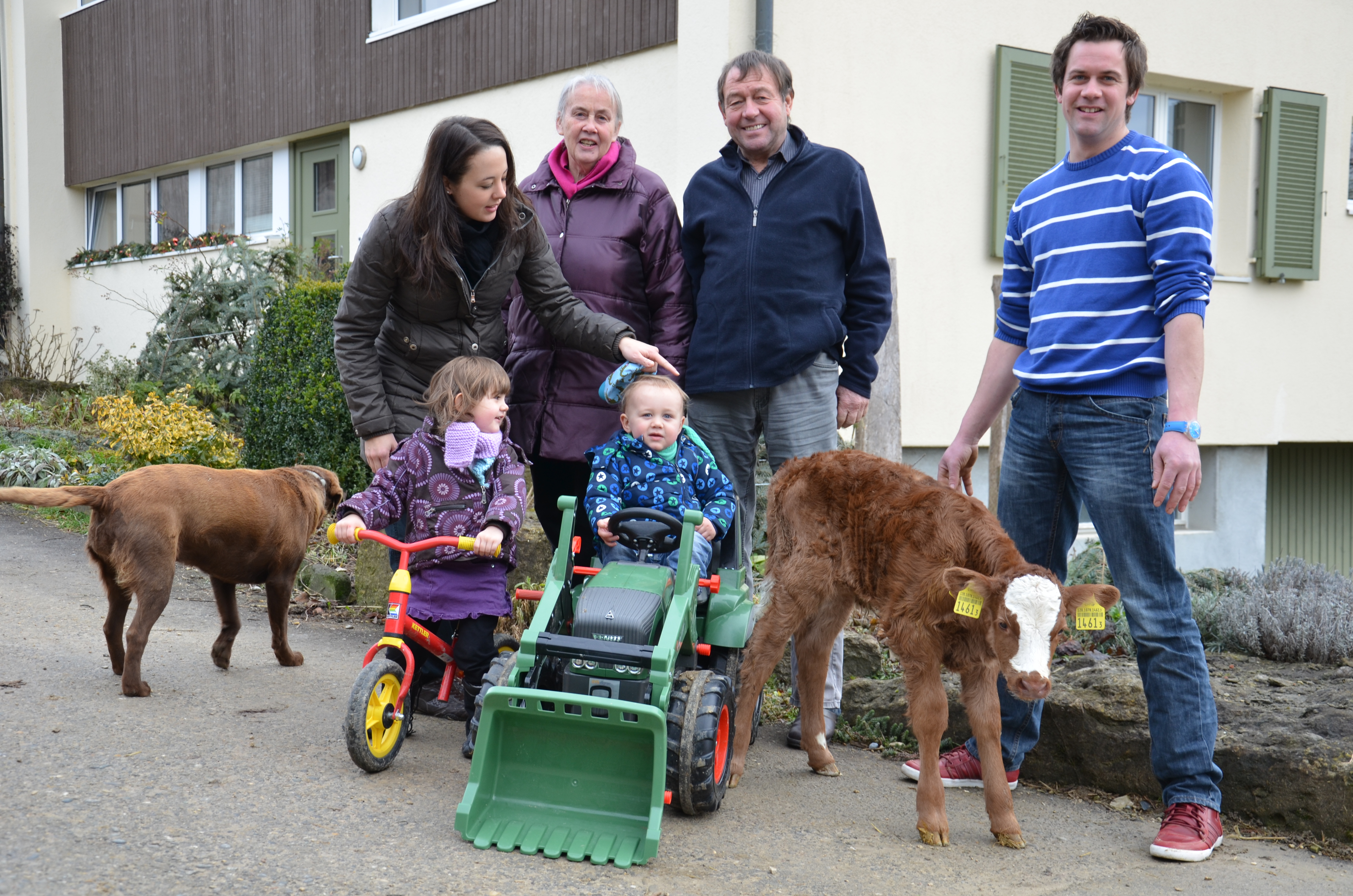
Benjamin and Rebekka Gasser with children Dinah and Yann, and parents Peter and Margrit farm the Miltenhof near Schleitheim, Switzerland

Benjamin and Rebekka Gasser with children Dinah and Yann, and parents Peter and Margrit farm the Miltenhof near Schleitheim, Switzerland

Farmers are often perceived as whiners, never happy really with their lot. “If a farmer isn’t complaining, something is probably wrong with him,” is a Swiss saying I heard while growing up. There does seem to be something to that. Either it’s too dry or it’s too wet, too hot or too cold,  prices are poor, interest rates are high, agriculture policies are impossible. That last is always a topic with Swiss farmers, who have some of the toughest agriculture legislation in the world.

So I was especially thrilled to meet four young Swiss farm families that are passionate about farming and positive about their future. I work part-time for the Schaffhauser Bauer, a weekly agriculture insert into the daily Schaffhauser Nachrichten. This being the International Year of Family Farming, we decided to portray a family farm once a month. It was my privilege to write the first four articles.

All four families live on the same yard as their parents, three of them in the same house (albeit with clearly separate apartments). While still the norm in rural Switzerland, problems related to living so closely together are a common concern heard by the ‘Sorgentelefon’, the Swiss Helpline for Farmers. Yet here are four families that make it work. The younger generation is thankful for the asset their parents are to them, both on the farm and with the children. There are clear rules which are followed, and both generations show an appreciation for each other.

I know three of the Dads, all of which are positive people with energy and drive. I also know them well enough to have heard them do their share of complaining, especially about the Swiss agriculture politics. When we sit together, I wonder why anyone would want to be a Swiss farmer anymore. It makes me glad we sold our Swiss farm back in 1991 and moved to Canada before the restrictions became so tight. These farmers are all glad they could pass the main responsibility on to their kids.

That’s why I get so excited when I am together with these young families. They radiate an energy most of the older generation doesn’t have any more. They don’t always like the agriculture politics either, but they work around them, are creative, build, and acquire land. They appreciate the perks the family farm gives them – the ability to be their own boss, be around their family, live and work with the land and the animals. They see enough of the stress their friends are under in the general working world. They’re happy with their lot.

They fire me up and fill me with new energy. It takes the ‘whine’ right out of me!

Posted in Uncategorized | Leave a comment

A Day in the Life of a Village

It’s spring in Switzerland. Dandelions bloom golden under airy brides of cherry and pear trees. The birds trill their cheeriest melodies for prospective mates. There really wasn’t ever what can be called a proper ‘winter’ this year. Hardly was there a time when a flower didn’t bloom somewhere; the grass was green all year. But when I first breathed in the cool damp earth on a nightly walk home I knew the winter was past.

The village is shrouded in blossoms - Beggingen, Switzerland (I live in Schleitheim, next door)

The village is shrouded in blossoms – Beggingen, Switzerland (I live in Schleitheim, next door)

Spring is new life. New life always springs from what was already there, with the prospect of new things ahead. So it is with this blog. There’s been a winter of over a year, and now it is spring. A new beginning, sprung from the past, with the promise of good things.

I started this day attending a birthday breakfast for a friend who just turned 50. Ten of us ‘girls’ gathered around a table lovingly laid and filled by her tiny wren of a mother-in-law. I haven’t laughed so much in a long time. There was serious talk too, but there was always laughter again. We made it home just in time for lunch.

The village church bells were already ringing. They always ring at noon if there is a funeral that afternoon, to remind everyone to get ready. Funerals are at 1:30 p.m. I was going too. I didn’t know the 47-year-old man who was being buried, who had taken his life in prison a year after he murdered what they said today was his beloved wife. I did know his mother though, a gentle sweet soul who sits beside my quite dement mother-in-law at the care home. It was for the mother I went. I already knew that she’d had a difficult life, mostly because of an abusive husband, who  passed away of cancer a few months ago. I wish things could have been different for her. And I wonder what was behind the tragedy of this man’s life, which according to the eulogy had looked so promising until a short time ago. He committed suicide on April Fools day. Was that supposed to be a bad joke, or was it just coincidence?

A friend has been in the hospital for ten days already with acute asthma issues. I’d promised her ten-year-old daughter I would drop by this afternoon. I was met at the door by her Italian husband, job-less now for some time. The girl was curled on the couch, pale, clutching a basin. She’d been throwing up since two in the morning. I ran over to the store for some Coca-Cola and pretzel sticks and wiped her face with a cold towel. When I left an hour later, my ears full of her Dad’s stories of Italian feasts, she was doing much better.

I think I’m ready for the couch and a cup of tea!

Posted in Uncategorized | 1 Comment

Best kept secret: Schleitheim is an artist’s haven!

Happy New Year everyone! At the start of a new year, I’ll pass on what my now deceased friend Joanne asked me once: What do you want the next chapter of your life to look like? You might not be able to control all your circumstances, but you can control your reactions, which to a large part write the chapter.

Hans Russenberger's latest public sculpture, 'de Laaterwägelibueb' spans the village creek. Russenberger was one of 30 artists to display at Scheitheim's art show.

Hans Russenberger’s latest public sculpture, ‘de Laaterwägelibueb’ spans the village creek. Russenberger was one of 30 artists to display at Scheitheim’s art show.

Schleitheim http://www.schleitheim.ch ended the last year on an artistic note. From December 28-30, 2012 it was home to a regional art fair, showcasing over 30 mostly local artists. Some of the names on the flyer were familiar to me and I was curious to see what would all be there. I left very excited about the quality and quantity of art produced in our corner of Switzerland.

A huge sculpture dominated the entrance to the show. Now there was something a farmer could relate to – old two bottom plows and shares welded together into an intricate figure. It’s the type of art to place at the farm gate.

Fitting for a rural community, 'plow art' dominates the entrance to the art show.

Fitting for a rural community, ‘plow art’ dominates the entrance to the art show.

Near the plow sculpture was the bust of a fibreglass woman who seemingly had sat in the woods for a long time already.  But brush and paint still lay nearby. It was an invitation by artist Margrit Gut, who grew up in Schleitheim, to come closer, to ponder – how should this piece be finished? Margrit is my sister-in-law’s mother. One of her sculptures, a huge Holstein cow, announces the entrance to the farm I grew up on in Canada. Margrit also paints and writes.

I love this piece by Margrit Gut (the picture) using a mix of mediums - weaving and paint.

I love this piece by Margrit Gut (the picture) using a mix of mediums – weaving and paint.

All of us in Schleitheim are familiar with Hans Russenberger’s sculptures in stone, iron and metal, placed in strategic places around the village. Last year he added ‘de Laaterwaegelibueb’ to the village collection – a metal sculpture of a young boy taking the milk to the dairy now spans the creek winding through the center of the village.

Then there’s Hans George Tenger, whose paintings hang in many homes and public buildings around the province and overseas – in our farmhouse in Canada for instance. He was just one of many artists displaying their paintings, in all styles.

Christoph Gasser, who lives in the same house we do, creates practical works of art from wood, tree trunks and stumps, making unique CD/DVD holders and wine racks.

What is it about this obscure valley at the far end of Switzerland that fosters such a burst of creativity, that drives people to paint, explore, express themselves? Whatever it is, I hope it rubs off on me as I continue on my own work of art, the book of stories from Zambia.

Posted in Uncategorized | Leave a comment